It’s no secret that productivity is crucial for a company's success, but did you know that outdated tech can be a huge productivity killer? The productive time lost each week varies significantly depending on the employer, employee, and the technology in use. To learn more about these costs, we examined results from multiple studies on this critical topic and will break it down with stats to show why keeping your technology up to date is essential for a smooth-running workplace.
The Hidden Costs of Old Tech
Old hardware and software can really drag down productivity. Think about all the times you’ve had to wait for a slow computer to load or deal with endless updates. Every second spent on these issues is time not spent working, and those seconds add up fast in the workplace, especially when you start multiplying it by the number of employees you have.
What the Research Says
Studies indicate that technology issues are a widespread problem. A survey by Compucom in the USA found that 22% of enterprise workers always had technology issues, and another 12% said they often did. Additionally, 28% reported sometimes having issues, 31% said rarely, and only 8% claimed they never have issues.
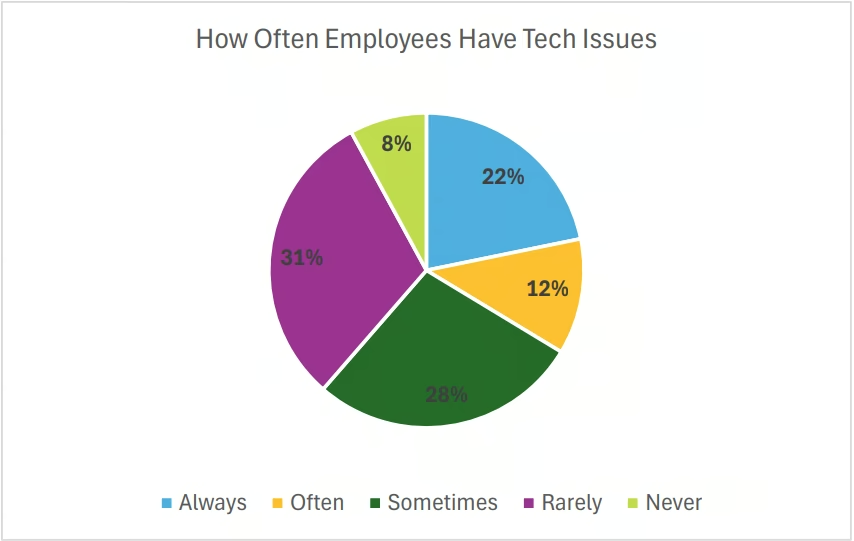
Image: Employee survey of how often they have tech issues at work. Data from Compucom.
In terms of time lost, another study found that the average employee experiences 14 negative digital experiences a week (crashes, glitches, and slow load times). Since each lasts about 3 minutes on average, that adds up to about 42 minutes per week or 36 hours per year per employee. For an enterprise company with 10,000 employees, that’s an estimated 360,000 hours each year averaged across all industries.
However, some industries and businesses experience more downtime than others. For instance, another study found that some employees can experience tech disruptions lasting over an hour and a half each week for every single employee! This results in companies losing approximately 10.5 workdays per employee per year.
Another study by Unisys broke down their survey even further to obtain the full range of losses. They found that in the USA, 5% of employees lost 10 or more hours per week in productivity due to technology issues or lack of tech support, 17% lost 6-10 hours, 24% lost 3-5 hours, 24% lost 1-2 hours, and 29% lost less than one hour.
What's also interesting is that when employers were asked if they measured lost productivity due to tech issues, 42% said no, 52% said yes, and 6% did not know if their company did. That alone is concerning. Do you know how much technology problems are costing you in productivity?
Two Levels of Tech Troubles
When we discuss productivity, we need to consider both the end-users and the IT staff who help resolve the problems. Non-specialist employees trying to fix their tech issues or asking their equally non-specialist colleagues for help means they're not doing the jobs they were hired for. Plus, when IT specialists are constantly fixing old IT assets that inevitably break down, their workload and job dissatisfaction increase, which can lead to burnout or the need to hire additional tech staff, further increasing repair and maintenance costs.
The Dollars and Cents of Lost Productivity
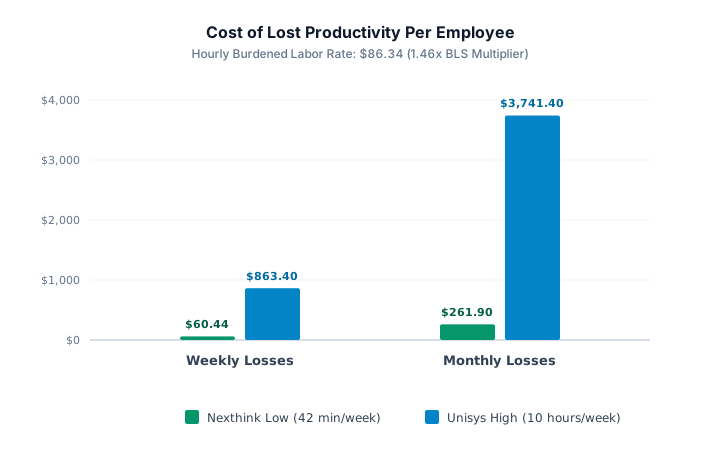
Image: Chart showing potential financial costs of lost productivity per employee per week and month.
Let's put some rough numbers to this scenario. The average wage for technology users, from entry-level to upper-level executives, costs $179,580 a year in wages and non-wage costs, and since they work 2,080 hours annually, that averages to about $86.34 per hour. So, lost productivity ranges from about $60 per week for an employee with the fewest issues to $863 per week for those with the most problems. For a company with 10,000 employees, that starts costing over $31 million annually. Sure, these are estimates, but you can see how quickly those numbers really add up!
Remote and Hybrid Work Challenges
Remote and hybrid work setups add another layer of complexity. Technology issues take longer to resolve when tech support isn’t physically present. A study found that 73% of remote workers lost significant time due to tech issues, compared to 41% of hybrid and 22% of on-site workers. With the number of fully remote workers hitting 26% in 2025, keeping their technology updated is crucial.
Technostress: The Hidden Cost of IT
Ever heard of technostress? It’s the stress caused by dealing with technology, whether it's from baby boomers who don’t understand how to use it or millennials dissatisfied with old tech, and everyone in between. Technostress can lead to social isolation, emotional overload, job insecurity, and work-life balance issues. Technostress increases dramatically when assets are outdated, as old tech is 2-3 times more likely to break down. Then, employees can’t make deadlines or start feeling inadequate compared to peers with newer IT assets. Technostress reduces overall employee satisfaction and can significantly increase employee turnover rates.
Attracting and Retaining Talent
The Great Resignation showed us how important it is to retain talent. Though turnover rates have declined since then, replacing employees is still very costly. On average, it costs tens of thousands of dollars at the low end of the scale, up to as much as two times the annual salary of that employee being replaced, or hundreds of thousands of dollars. Why? It's because of the lost productivity during the training period, plus things like hiring costs, interviewing time, advertising expenses, HR costs, and more. If you have 10,000 employees with a 17% turnover rate, that works out to 1,700 employees per year. Say they "only" cost $20,000 each; that still adds up to about $34 million dollars just in employee turnover costs.
So why do employees leave? Studies show that salary is the primary reason why employees voluntarily leave. That's not surprising, but what is surprising is that having the right technology tools was deemed almost as important as salary. That means a significant number of those 1,700 employees leaving each year do so because of outdated technology, again highlighting the need to refresh that tech to retain talent.
In fact, when asked how much they value good technology, 71% of employees across all age groups said very much, 21% said somewhat, and only 8% felt that quality IT was not important. Therefore, quality IT definitely improves employee experiences and reduces technostress, making people more likely to stay with your company.
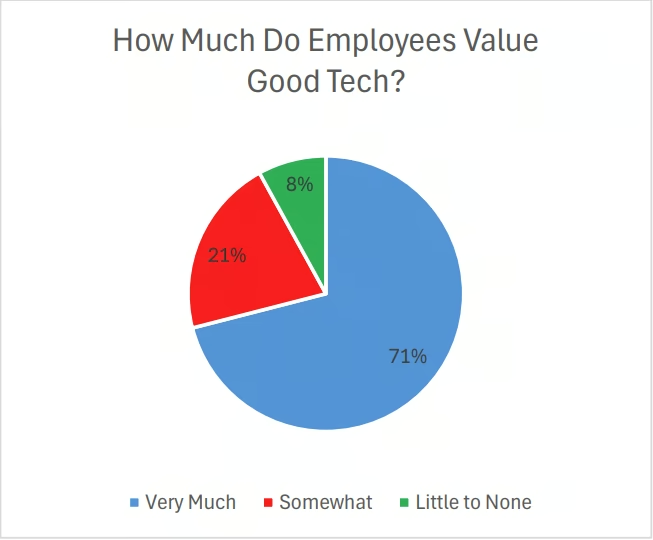
Image: Chart of Employee survey results when asked how much they value good tech. Data from Compucom.
Downtime: A Major Productivity Killer
Downtime from computer freezes or network outages is a significant productivity drain. It’s caused by outdated tech, inconsistent backups, and poor security practices. In 2022, 76% of companies experienced downtime, a 25% increase from the previous year. The real cost of downtime is not just the time it takes to fix it, which is only 5%, but the other 95% is lost productive time (78%) and lost revenue (17%).
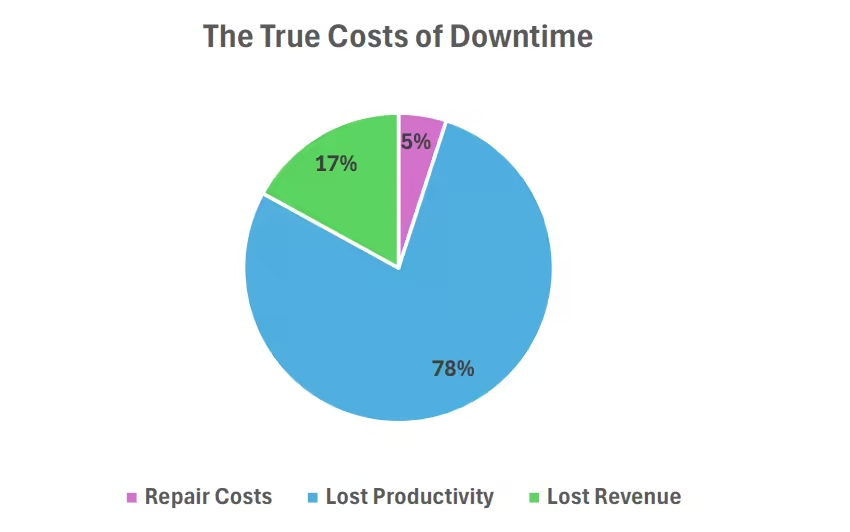
Chart showing what the true costs of downtime are. Data from Acronis.
So, How Much Does Downtime Cost?
Downtime costs a significant amount of money. While just a few years ago when we first researched this topic, an (ITIC) survey estimated the cost of IT downtime at about $5,000 per minute on average. But new research from Splunk (2025) shows that the average cost of downtime for enterprises is now $15,000 per minute. On the other end of the scale, extreme cases can reach millions per minute. You can avoid this downtime by performing a tech refresh on time.
Final Thoughts
Managing employee productivity isn’t just about tracking work hours. It’s about ensuring that your employees have access to reliable and updated technology. Addressing tech issues quickly and providing robust support can significantly reduce productivity losses. Knowing when to retire old tech and investing in new assets not only boosts productivity but also enhances employee satisfaction and retention, driving your company’s success.
Find Out How We Can Help
If you would like additional information, refer to our white paper on Balancing Tech Spending and Employee Productivity.
If you are an enterprise, government, or institution looking for ITAD solutions or have any additional questions, please contact us at ICT.
Selected References
Acronis Cyber Protection Week Global Report. (2022). https://dl.acronis.com/u/rc/Acronis-Cyber-Protection-Week-Global-Report-2022.pdf
Compucom (2023). Data and analysis from our in-depth survey of hybrid worker IT experiences -and insights for improving them Connecting the Dots: Experience, Technology, and the Hybrid Work Environment Research Findings. Compucom White Paper. https://www.compucom.com/
Martini, D. (2023, February 20). Wasted Talent: Time Lost to (Old) Tech Issues. Electric. https://www.electric.ai/blog/wasted-talent-time-lost-to-tech-issues
Nexthink (2025). Cracking The DEX Equation | The First Annual Workplace Productivity Report. https://nexthink.com/resource/cracking-the-dex-equation-or-the-first-annual-workplace-productivity-report
Splunk. (2025). The Hidden Costs of Downtime. Splunk – a CISCO Company. https://www.splunk.com/en_us/form/the-hidden-costs-of-downtime.html
Unisys (2023). From Surviving to Thriving in Hybrid Work Comprehensive data and insights Hybrid work IT support Security Technology Employee Experience Motivation and Engagement. From https://www.unisys.com/siteassets/microsites/hfs-insights/hfs-comprehensive-data-and-insights-report.pdf
©ICT Inc. 2024-2034. All rights reserved. Unauthorized reproduction, distribution, or use of this article, in whole or in part, without proper attribution to ICT Inc. is strictly prohibited.